E-ISSN: 1019-5157
ISSN: 2651-5024



News See All

This is a formal announcement for our authors, reviewers, and editors regarding the implementation of a new, user-friendly online submission and peer-review system.
Current Issue See All
AIM: To evaluate Deepseek-R1, Gemini-2.0 Pro, ChatGPT-o3-mini-high, and GPT-4.5 on a mock neurosurgery board exam to assess
their accuracy and educat...
AIM: To evaluate the efficacy and safety of topical tranexamic acid (tTXA) in thoracolumbar fusion surgery.
MATERIAL and METHODS: A systematic review...
AIM: To evaluate the impact of generative artificial intelligence and large language models (LLMs) on medical training and
neurosurgical education, s...
AIM: To assess the overall trends in scientific dissemination at neurosurgery meetings organized by the Turkish Neurosurgical
Society (TNS) and the S...
AIM: To compare haemostasis induced with tranexamic acid (TXA) and immunosuppression induced with infliximab (INF) as
strategies to reduce epidural f...
Latest Issue
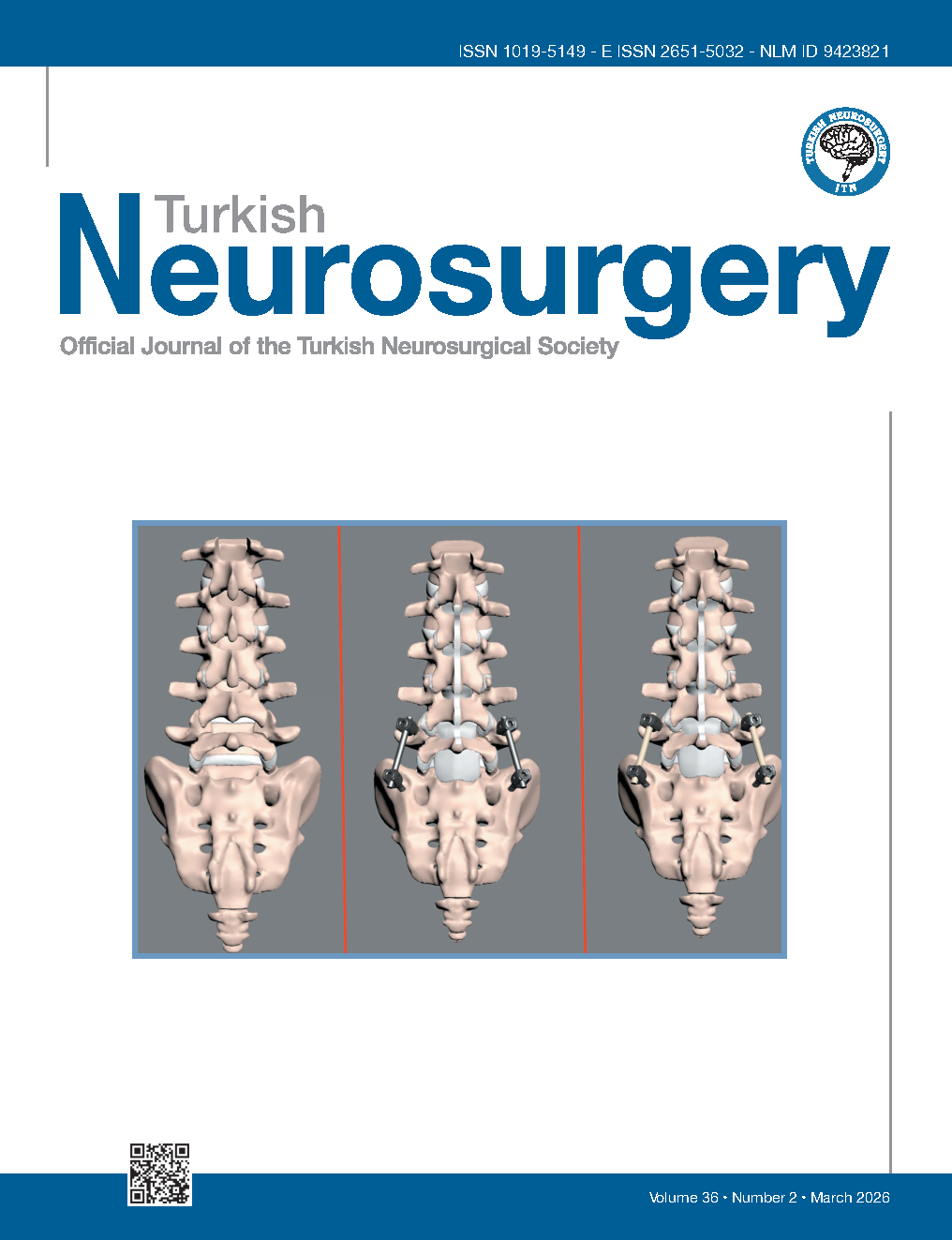
Volume 36 Issues 2
Publisher
_page-0001.jpg)
Releated Journals